

Big Change Starts with Little Ways
A practical, heart-centered approach to building truly inclusive school communities - one small, intentional act at a time.
What Is the Little Ways Project?
The Little Ways Project equips teachers, parents, and school leaders with practical tools for reimagining special education as a mission of belonging. Inspired by St. Thérèse of Lisieux and her 'Little Way' of small, faithful acts of love, this initiative reframes special education within Catholic schools as a mission rooted in love and belonging.
Developed through over thirty years of work in Catholic and faith-based schools, the Little Ways Project gives educators, families, and school communities practical tools to create classrooms where every student, regardless of ability, is included, valued, and seen.
Inclusion in Catholic schools is not merely a policy decision; it reflects our belief in the unique creation of each child by God. From a single classroom to a whole-school culture shift, the Little Ways Project meets schools where they are and helps them take the next step toward authentic inclusion.
Six Principles That Build Belonging
The Little Ways framework is built around six research-grounded, faith-rooted principles. Each one is a small, intentional act that adds up to a culture of inclusion.
Love First
Build Rapport
Inclusion strategies begin with relationships. Before accommodations, before interventions, and before assessments, there must be a connection. Students thrive when they feel seen and safe.
Identify Strengths
Strengths-Based Approach
We do not begin with deficits. We begin with gifts. Every child carries strengths (humor, memory, empathy, artistry, logic, perseverance). Identifying strengths shifts the narrative from 'What is wrong?' to 'What is strong?'
Teach the Whole Learner
Learner-Centered Approach
A learner-centered classroom recognizes differences in processing, communication, and regulation. It honors varied learning profiles and offers multiple ways to engage and demonstrate understanding. The goal is not sameness, it is growth.
Turn Toward Christ
Christ-Centered Approach
Catholic inclusion is not merely educational, it is theological. Every student bears the image of God. Christ-centered inclusion asks: How do we reflect Christ's welcome? How do we make the sacraments accessible? How do we teach peers that dignity is not earned by performance?
Link Through Peer Friendship
Authentic Belonging
True belonging happens when students form authentic friendships, not helper-helped dynamics, not charity, but mutual connection. Peer ministry, buddy systems, and shared leadership opportunities cultivate reciprocal relationships.
Empower with Purpose
Purpose and Belonging
Inclusion matures when students are given real roles. Purpose builds dignity. When students contribute to liturgy, lead projects, serve others, or mentor peers, they move from recipient to contributor, enhancing their sense of belonging in the community.
Everything You Need to Build Belonging
The Book
A guide for educators and families that translates inclusion philosophy into everyday classroom practice - full of real stories, reflection prompts, and actionable strategies. Self-paced courses are also available.
Teacher Resources/Curriculum
Lesson frameworks, discussion guides, and classroom tools that help teachers build belonging into the fabric of daily school life.
Family Resources
Conversation starters, home activities, and community-building ideas that extend inclusion beyond the school walls.
Professional Development
Workshops, coaching, and keynotes that equip school staff with the mindset and skills to lead inclusive communities.
Speaking & Keynotes
Inspiring, practical presentations for school staff days, parent nights, diocesan events, and education conferences.
Whole-School Consulting
Customized support for schools ready to make inclusion a core part of their identity from policy to practice.
The Little Ways Project: Reimagining Special Education in Catholic Schools
Inclusion in Catholic schools is not merely a policy decision. It is a reflection of who we believe God created each child to be. Inspired by St. Thérèse of Lisieux and her "Little Way" of small, faithful acts of love, this book reframes special education in Catholic schools as a mission of love and belonging. Drawing on vast experience in special education and faith-based leadership, this book presents a strengths-based framework for cultivating inclusive school communities.
Educators and leaders will discover practical strategies for supporting diverse learners, guidance for navigating accommodations, and tools for forming students as ambassadors of empathy and acceptance.
"Inclusion is not a program. It is a reflection of the Gospel."
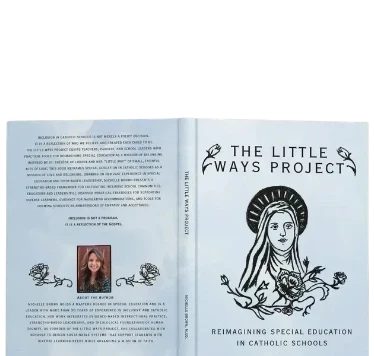

Inspired by St. Thérèse of Lisieux
Who Is This For?
The Little Ways Project was built for the people who show up every day and want to do better for every student.
Catholic & Faith-Based Schools
Rooted in the belief that every person is made in the image and likeness of God, The Little Ways Project is a natural fit for Catholic school communities seeking to live out their mission of dignity and belonging.
General Education Teachers
Practical tools and frameworks that fit into the real rhythms of a classroom. no overhaul required, just intentional and simple next steps.
Special Education Staff
Strategies for building bridges between special and general education, and for advocating for students in inclusive settings.
School Administrators
Whole-school frameworks and consulting support to make inclusion a sustainable, values-driven part of your school culture.
Families
Resources and community to help families advocate for their children, connect with schools, and build belonging at home.
Dioceses & School Networks
Scalable professional development and keynote programming for groups of schools working toward a shared vision of inclusion.

Bring the Little Ways Project to Your Staff
Whether you're looking for a single inspiring keynote or a year-long coaching partnership, we meet your school where it is. All professional development is grounded in real classroom experience, current research, and the belief that teachers are the most powerful force for inclusion in a child's life.
- Keynote Presentations — Energizing, story-rich presentations for staff days, parent nights, and diocesan events.
- Half & Full-Day Workshops — Deep-dive sessions on specific inclusion topics — from co-teaching to belonging-centered classroom design.
- Coaching & Consultation — Ongoing support for teachers and administrators navigating the real complexities of inclusive education.
- Customized Training — Tailored programming built around your school's specific goals, student population, and community values.
How to Fund the Little Ways Project at Your School
Bringing the Little Ways Project to your Catholic or private school doesn't have to be a budget challenge. Federal grants are available to non-public schools through equitable services provided by your Local Education Agency (LEA) — and we can help you navigate the conversation.
Title I, Part A for Non-Public Schools
This federal grant provides additional funding to non-public schools that serve a high percentage of low-income or at-risk students. It supports programs that offer instructional services, mentoring, counseling, family engagement, and character development - helping ensure all children meet academic standards.
Title II, Part A: Supporting Effective Instruction
Private schools access Title II services through equitable support provided by the LEA. Our professional development offerings align with allowable uses of Title II funds, helping educators build the skills needed to foster student success and a positive school climate.
Title IV, Part A: Student Support and Academic Enrichment
Private schools access services through equitable services provided by the LEA after meaningful consultation. Our programs align with Title IV by supporting well-rounded education, safe and healthy school environments, and improved instructional practices.
IDEA Part B: Individuals with Disabilities Education Act
Eligible non-public schools can benefit through equitable services provided by the LEA. Our evidence-based tools and training support the character-building development of students with disabilities while promoting inclusive, supportive learning environments for all learners.
Note: Non-public schools do not receive federal funding directly. Instead, they benefit from secular, neutral, and non-ideological services delivered by the LEA — such as character education programs, anti-bullying resources, trauma-informed training, and school climate tools.